Sciton Technology: Engineering Precision at the Wavelength Level

29 years of proprietary research in laser-tissue interaction, from fundamental photophysics to validated clinical protocols. Our engineering methodology begins with the science and ends with measurable patient outcomes.

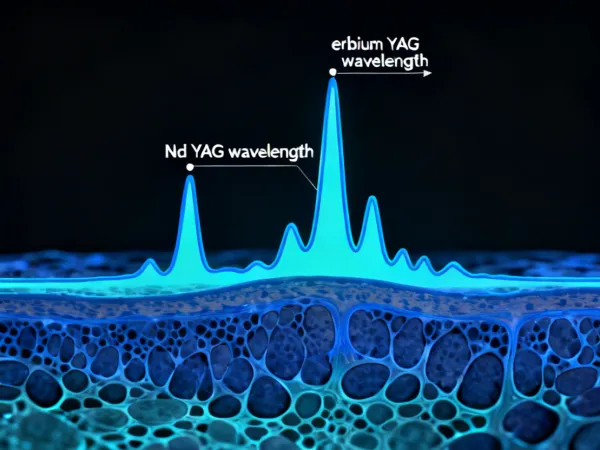
Sciton laser wavelength absorption spectrum analysis
Wavelength Science

Proprietary Wavelength Platforms

Sciton engineers laser systems from first principles of photon-tissue interaction. Our dual-wavelength architecture provides clinicians with complementary tissue targets:

Er:YAG 2940nm Peak water absorption. Enables ablation depths from 4 microns (NanoLaserPeel) to 350+ microns (Contour TRL) with thermal damage zones under 20 microns at lower fluences.
Nd:YAG 1064nm Deep dermal penetration to 5-6mm. Selectively targets hemoglobin chromophores while preserving surrounding tissue, with adjustable pulse durations from sub-millisecond to hundreds of milliseconds.
BBL 400-1400nm Broadband spectral output with interchangeable Smart Filters for wavelength-selective targeting of melanin, hemoglobin, and water chromophores across the visible and near-infrared spectrum.

Our Engineering Methodology

Every Sciton platform follows a rigorous development pipeline from fundamental research through clinical validation.

01

Photophysics Research

Fundamental investigation of laser-tissue interaction parameters including absorption coefficients, thermal relaxation times, and photomechanical effects across target chromophores. This phase typically spans 12-18 months with university research partners.

02

Prototype Engineering

Optical system design, resonator optimization, and beam delivery architecture using computational modeling and finite element analysis. Each subsystem undergoes individual performance qualification against target specifications before integration.

03

Pre-Clinical Validation

Ex vivo tissue testing quantifies ablation depth profiles, thermal damage zones, and treatment uniformity. Histological analysis confirms predicted tissue effects at various parameter combinations, establishing the clinical operating envelope.

04

Clinical Trials & Clearance

IRB-approved clinical studies with blinded physician assessments, validated scoring instruments, and standardized photography protocols. Data packages support FDA 510(k) clearance and CE marking through recognized regulatory pathways.

Sciton research partnership with university medical center
Research Network

Academic & Clinical Research Partnerships

Sciton maintains active research collaborations with leading academic medical centers and clinical research organizations. These partnerships generate the peer-reviewed evidence base that supports our treatment protocols and informs ongoing platform development.

  • Over 200 peer-reviewed publications referencing Sciton technology
  • Multi-center clinical trials across dermatology, plastic surgery, and gynecology
  • Ongoing Stanford University gene expression research on BBL-treated tissue
  • Sponsored investigator-initiated studies at 15+ academic institutions
  • Annual Sciton Clinical Symposium for protocol sharing and case discussion

Note: Publication counts are approximate and include both company-sponsored and independent investigator studies. Not all studies may be available in all regions. Specific clinical outcomes depend on patient selection, treatment parameters, and practitioner expertise.

Aesthetic Laser Wavelength Comparison

An objective comparison of the primary wavelength technologies used in aesthetic and medical laser applications. Each wavelength has distinct advantages and limitations depending on the clinical indication.

Parameter Er:YAG 2940nm CO2 10,600nm Nd:YAG 1064nm Diode 810nm Alexandrite 755nm
Primary Chromophore Water (absorption ~12,000 cm-1) Water (absorption ~800 cm-1) Hemoglobin, melanin (deep) Melanin Melanin
Tissue Penetration Depth 1-10 μm per pulse 20-60 μm per pulse 5-6mm 2-3mm 1.5-3mm
Residual Thermal Damage 5-20 μm (low) 50-150 μm (high) Variable (pulse-dependent) Moderate Moderate
Typical Downtime 3-7 days (ablative resurfacing) 10-21 days (ablative resurfacing) 0-3 days (vascular treatments) 0-1 days 0-1 days
Fitzpatrick Safety Range Types I-VI (with protocols) Types I-III (higher PIH risk in darker skin) Types I-VI Types I-IV Types I-III
Key Clinical Applications Resurfacing, ablation, scar revision Deep resurfacing, surgical excision Vascular lesions, deep heating Hair removal, vascular Hair removal, pigment
Precision Control Excellent (4-350+ μm depth range) Good (less precise per-pass depth) Good (pulse duration dependent) Moderate Moderate
Key Limitation Cannot reach deep vascular structures; limited hemoglobin absorption Higher scarring and PIH risk; longer recovery; contraindicated in Fitzpatrick V-VI Not suited for precision superficial ablation; risk of deep thermal injury Limited to melanin-rich targets; reduced efficacy on light/fine hair Melanin-dependent; unsafe on darker skin types; limited application range

Source: Data compiled from published literature including Tanzi et al., Lasers in Surgery and Medicine, 2003; Ross et al., Dermatologic Clinics, 2002; and Alexiades-Armenakas et al., Journal of Drugs in Dermatology, 2008. Individual device performance varies by manufacturer, model, and treatment parameters. This comparison represents general wavelength characteristics, not specific product claims. Sciton platforms utilize Er:YAG 2940nm and Nd:YAG 1064nm wavelengths; we do not manufacture CO2, diode, or alexandrite systems.

Understanding Technology Boundaries

Informed technology evaluation requires understanding what each platform can and cannot do. Transparency about limitations builds stronger clinical partnerships.

Materials & Tissue Limitations

Laser energy interacts with specific chromophores, meaning no single wavelength addresses all clinical needs. Er:YAG 2940nm is poorly absorbed by hemoglobin, making it unsuitable as a standalone vascular treatment. Nd:YAG 1064nm lacks the water absorption coefficient needed for precise superficial ablation. BBL broadband light cannot penetrate to dermal depths required for deep scar remodeling. Tattoo removal with polychromatic inks typically requires multiple wavelength Q-switched systems, which is outside the Sciton platform scope. Heavily tanned skin (recent UV exposure within 4-6 weeks) increases complication risk across all laser modalities and requires treatment deferral.

Operational Considerations

Sciton systems require dedicated 20A electrical circuits (110V or 220V depending on model), adequate room ventilation, and a laser-grade smoke evacuation system. Annual preventive maintenance is required to maintain calibration accuracy within specification, typically requiring 4-6 hours of system downtime per service visit. Handpiece tips and optical components are consumable items with documented lifecycle limits that vary by module and treatment volume. Practitioners must meet state and/or national credentialing requirements for laser operation, which differ by jurisdiction. Clinical outcomes are operator-dependent; equivalent equipment does not guarantee equivalent results without proper training and protocol adherence.

Cost-Benefit Transparency

Medical aesthetic laser platforms represent a significant capital investment ($80,000-$250,000+ depending on configuration). Return on investment depends on procedure pricing in your market, patient volume, and payer mix. Based on industry data from the American Med Spa Association (AmSpa) 2023 Medical Spa State of the Industry Report, practices typically require 12-24 months to reach positive ROI on laser equipment, though this varies widely by geography and specialty. Leasing options (36-72 month terms) reduce upfront capital requirements but increase total cost of ownership by approximately 15-25% over the lease term. We recommend a detailed financial analysis with your practice consultant before acquisition.

Treatment Outcome Variability

Published clinical trial outcomes represent controlled study conditions with experienced investigators. Real-world results vary based on patient factors including skin type (Fitzpatrick classification), healing response, medication history (isotretinoin use within 6-12 months is a contraindication for ablative procedures), smoking status, and sun exposure habits. Patient satisfaction scores in peer-reviewed studies typically range from 80-90% for well-selected candidates but can drop to 50-60% when patient selection criteria are not rigorously applied, as noted in a 2018 meta-analysis in the Journal of the American Academy of Dermatology. We recommend structured consultation protocols to set realistic patient expectations.

Quality Assurance & Regulatory Compliance

Manufacturing processes designed for medical-device grade consistency and traceability.

ISO 13485:2016

Our Palo Alto manufacturing facility operates under ISO 13485 medical device quality management certification, with annual surveillance audits ensuring continuous compliance with design control, risk management, and corrective action procedures.

FDA 510(k) Pathway

Sciton platforms are cleared through the FDA's 510(k) premarket notification process, demonstrating substantial equivalence to legally marketed predicate devices. Our regulatory team maintains active device listings with the FDA Center for Devices and Radiological Health.

147-Point Verification

Each system undergoes a comprehensive calibration and quality verification sequence covering optical alignment, energy output consistency, beam profile uniformity, safety interlock function, and software validation before shipment authorization.

Explore the Science Behind Our Platforms

Request our clinical white papers and peer-reviewed publication library to evaluate the evidence base for Sciton technology in your specialty area.

Request Technical Documentation